Tag

Legal Awareness India
Tax Cannot Be Imposed by Inference: SC on Assam Sales Tax Reassessment
18
Sep

Tax Cannot Be Imposed by Inference: SC on Assam Sales Tax Reassessment

Case: M/S. Shiv Steels v. State of Assam & Ors.
Court: Supreme Court of India
Date of Judgment: 11 September 2025
Coram: Hon’ble Justices JB Pardiwala and Sandeep Mehta
Citation: 2025 INSC 1126; 2025 LiveLaw (SC) 921

Summary

The Supreme Court set aside the Gauhati High Court’s decision and ruled that reassessment under Section 21 of the Assam General Sales Tax Act, 1993, cannot be used to salvage assessments already declared time-barred under Section 19. It reaffirmed that taxation must strictly follow the letter of law and no tax can be imposed by inference, analogy, or administrative sanction.

Background

  • The case concerned assessment years 2003–2006 under the Assam General Sales Tax Act, 1993.
  • Assessments made under Section 19 were declared time-barred.
  • The Sales Tax department, however, obtained the Commissioner’s sanction and reopened the assessments under Section 21.
  • Gauhati High Court upheld this reassessment, prompting the appellant to approach the Supreme Court.

Key Issues

  • The department wrongfully invoked Section 21 despite earlier assessments being declared invalid for being out of time.
  • The appellant argued that Section 21 could only apply where no assessment was made within the Section 19 limitation, not where an assessment had already been undertaken and lapsed.

Supreme Court Findings

  • Fiscal statutes must be construed strictly; taxation requires clear legislative authority.
  • “No tax can be imposed by inference or analogy… if the case is not covered strictly within the four corners of the taxing statute.”

Cited Precedents

  • The Court reiterated the long-settled principle in fiscal law: strict construction must apply, and taxing authorities cannot probe legislative intent beyond the written word.

Important Observations

1. Strict Interpretation of Fiscal Statutes

  • The Supreme Court reiterated the settled principle that taxing statutes must be interpreted strictly. Tax liability can arise only if the statute expressly authorizes it.
  • The Court emphasized that taxation cannot be imposed by inference, analogy, or legislative intent; the liability must be found strictly within the four corners of the statute.

2. No Tax Beyond Limitation Periods

  • The Court underlined that statutory limitation provisions in tax laws are sacrosanct. Once the period prescribed under Section 19 of the Assam General Sales Tax Act lapses, the assessment becomes time-barred.
  • Allowing reassessment through administrative sanction after the expiry of limitation would defeat the very object of certainty and finality in taxation.

3. Section 21 AGST Act Cannot Be Misused

  • The Court clarified that Section 21 of the AGST Act was enacted only to cover cases where no assessment had been carried out at all under Section 19.
  • It cannot be invoked in cases where an assessment was indeed made but later declared invalid as time-barred. Reusing Section 21 in such cases would amount to bypassing the statute.

4. Invalid Use of Commissioner’s Sanction

  • The Court held that obtaining the Commissioner’s prior approval does not cure the defect of limitation. Administrative approval cannot override statutory provisions.
  • The Commissioner’s sanction is relevant only within the framework of the Act, not to resuscitate assessments that have already become unenforceable by law.

5. High Court’s Error

  • The Supreme Court observed that the Gauhati High Court had misinterpreted both Sections 19 and 21, wrongly concluding that reassessment was permissible despite the original assessment being barred by time.
  • The Apex Court corrected this by stressing that Section 21 applies only where assessment was not made at all, not where an invalid assessment had been attempted.

This judgment reinforces taxpayer protection against arbitrary reassessment beyond statutory timelines. It also highlights that administrative actions cannot expand legislative authority. For businesses, this ensures predictability and safeguards against endless reopening of tax assessments.

Outcome

  • Appeals allowed.
  • Gauhati High Court judgment set aside.
  • Reassessments quashed as invalid.

Final Thoughts

This ruling is crucial for tax litigation and compliance as it safeguards taxpayers from arbitrary reassessments. It underscores the principle that taxation requires express statutory authority, ensuring certainty and fairness in fiscal governance.

SOURCE: LiveLaw

Adv. Neeraj Kumar Garg

Supreme Court Clarifies: Jurisdiction Clause Decides Seat When Not Expressly Stated
14
Aug

Supreme Court Clarifies: Jurisdiction Clause Decides Seat When Not Expressly Stated

Case: M/S Activitas Management Advisor Pvt. Ltd. v. Mind Plus Healthcare Pvt. Ltd.
Court: Supreme Court of India
Date of Judgment: 5 August 2025
Coram: Hon’ble Justices Pamidighantam Sri Narasimha & Atul S. Chandurkar
Citation: 2025 LiveLaw (SC) 795

Summary

The Supreme Court held that where an arbitration agreement vests exclusive jurisdiction in a specific court, that location will be treated as the “seat” of arbitration even if the agreement does not explicitly mention “seat” or “venue.” Accordingly, the Court set aside the Punjab & Haryana High Court’s order appointing an arbitrator and held that the Bombay High Court had exclusive jurisdiction in this case.

Background

  • The appellant (a consultancy firm) and respondent entered into an agreement dated 9 July 2023.
  • Clause 10 of the agreement vested exclusive jurisdiction in the Bombay High Court and provided for arbitration under the Arbitration and Conciliation Act, 1996.
  • A dispute arose, and the appellant invoked Section 21 of the Act.
  • The respondent filed a Section 11 application before the Punjab & Haryana High Court.
  • The appellant objected on jurisdictional grounds, citing Clause 10.
  • Despite this, the High Court appointed an arbitrator.

Key Issues

  • Appellant: High Court lacked jurisdiction; exclusive jurisdiction was with the Bombay High Court.
  • Respondent: Under Section 11, the Punjab & Haryana High Court could also assume jurisdiction.

Supreme Court Findings

1. Exclusive Jurisdiction Equals Seat

  • Even without using the terms “seat” or “venue,” specifying exclusive jurisdiction for arbitration-related matters in an agreement indicates the seat of arbitration.
  • The exclusive jurisdiction clause must be understood in the context of arbitration, making Mumbai the seat.

2. Application of Precedent

  • Cited Brahmani River Pellets Ltd. v. Kamachi Industries Ltd. (2020) — if jurisdiction is specified for a court at a particular place, only that court can handle matters, excluding all others.

3. Effect on Proceedings

  • The Bombay High Court has jurisdiction to entertain the Section 11 application.
  • The pending application before the Bombay High Court can proceed, and the respondent can contest it there.

Cited Precedents

  • Brahmani River Pellets Ltd. v. Kamachi Industries Ltd., (2020) 5 SCC 462.

Important Observations

  • The absence of the words “seat” or “venue” is not fatal if the agreement shows intent to confer exclusive jurisdiction.
  • Jurisdiction clauses in arbitration agreements should be construed with their arbitration context in mind.

This judgment reaffirms the significance of jurisdiction clauses in arbitration agreements. Even without explicit mention of “seat,” the court will infer it from the jurisdiction clause, which can override other competing forums. This is crucial for drafting airtight arbitration clauses to avoid jurisdictional challenges.

Outcome

  • Appeal allowed.
  • Punjab & Haryana High Court’s order appointing an arbitrator set aside.
  • Parties to pursue proceedings before the Bombay High Court.

Final Thoughts

This ruling will be crucial for ensuring accountability in criminal prosecutions, especially where not all offenders are charge-sheeted. It allows courts to address investigative gaps early and ensure that no guilty party escapes due to procedural technicalities. The judgment strengthens the judiciary’s role in delivering complete and substantive justice, even before a trial begins.

SOURCE: LiveLaw

Adv. Neeraj Kumar Garg

Legal Aid Camp with TYCIA Foundation’s Project Second Chance
18
Jul

Experience at the Legal Aid Camp with TYCIA Foundation’s Project Second Chance

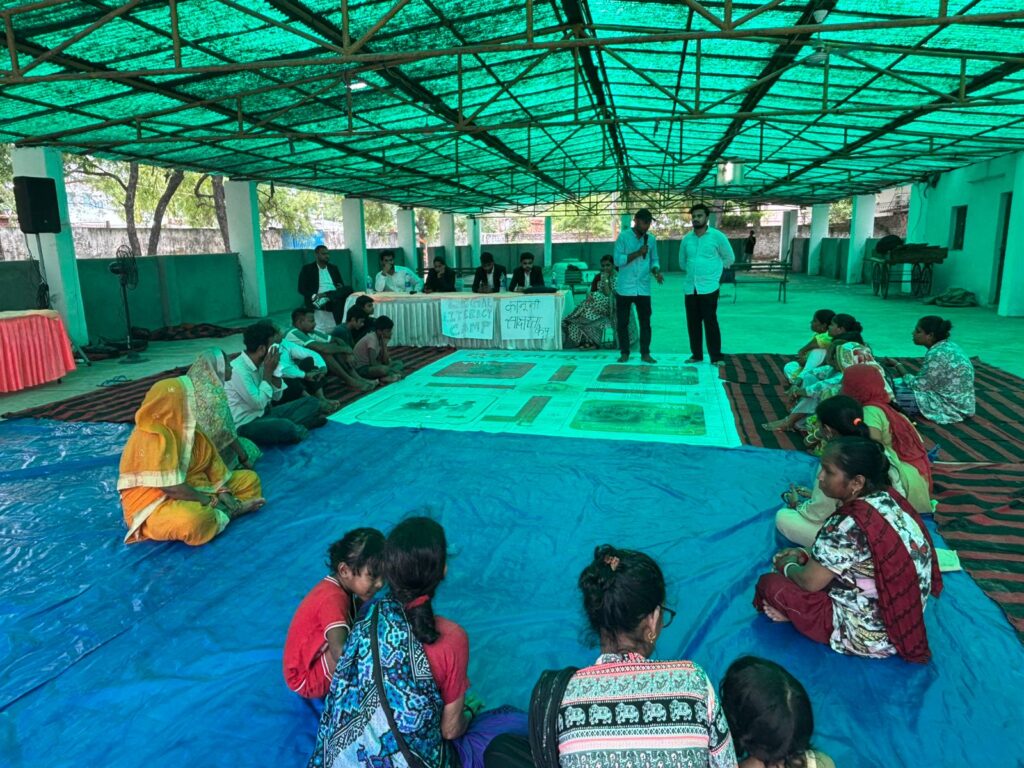
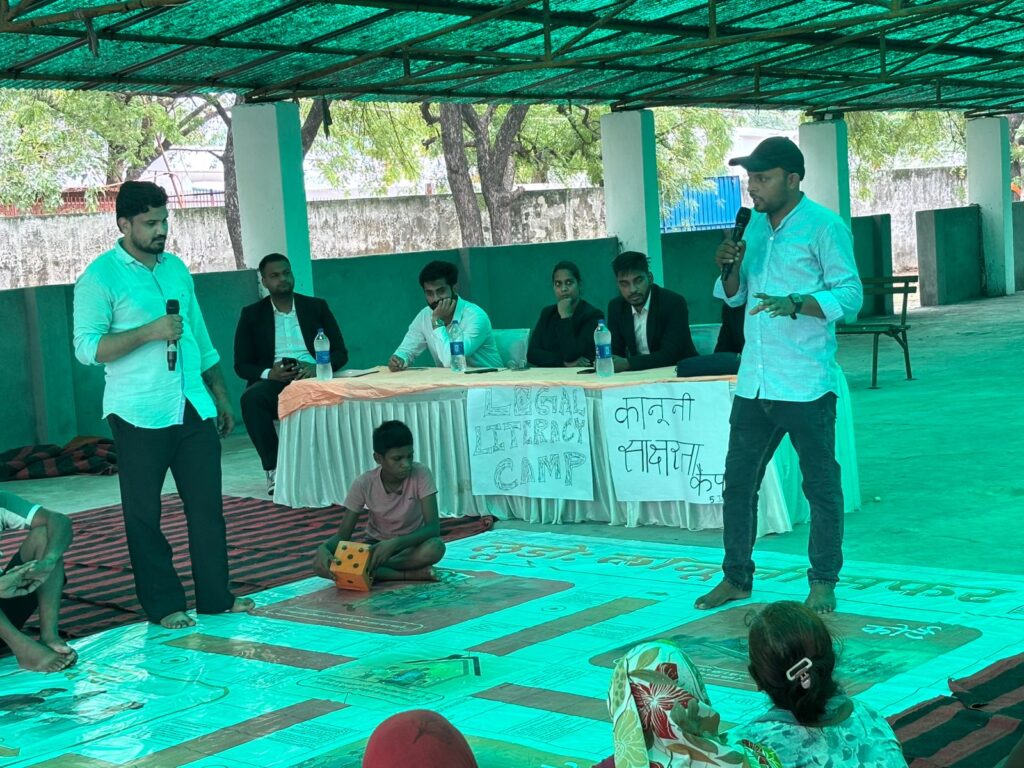
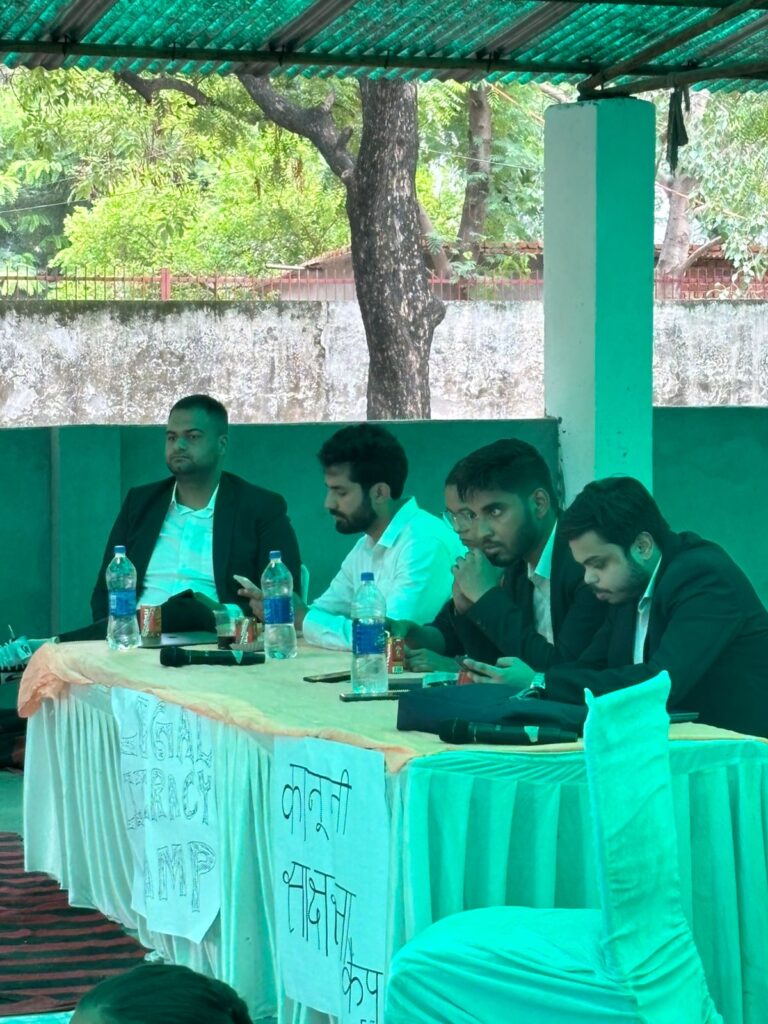
At Legal Partners And Associates, we believe that the law should not just exist in courtrooms—it should live where people need it most. Recently, we had the privilege of joining hands with the TYCIA Foundation through their remarkable initiative, Project Second Chance, to participate in a legal aid camp for individuals who often remain unheard and underserved by the justice system.

Representing our firm at the event were Vansh and Soumya Singh, guided by our dedicated senior, Advocate Alsaba Ayyan. What unfolded that day was more than just legal consultation—it was connection, compassion, and the quiet power of knowledge.

The day began in an unexpected but brilliant way—a legal-themed Ludo game. Participants were divided into four teams, each move on the board prompting important legal questions. From understanding the difference between bailable and non-bailable offences, to knowing what to do when someone is arrested, and what questions to ask an advocate, every dice roll turned into a moment of legal empowerment.

As volunteers, we stepped in to explain and clarify whenever needed. What started as a game quickly became a space of shared learning, curiosity, and awareness.

When the Real Conversations Began

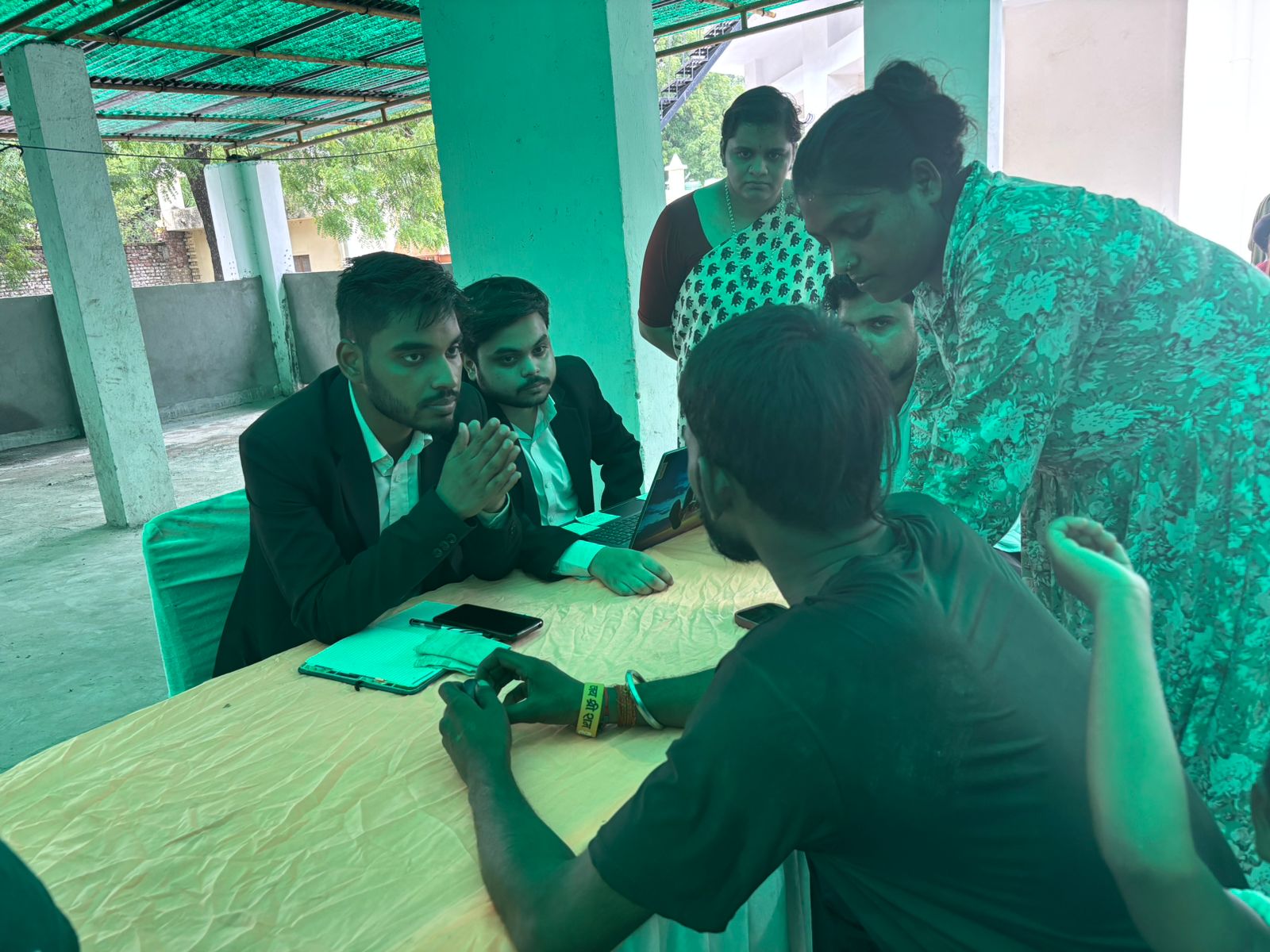
After the activity, people began approaching us with their personal legal challenges. These were not hypothetical or academic queries—they were real, raw, and pressing.

We listened to stories of domestic violence, divorce and maintenance disputes, police harassment, recovery matters, and even the tragic pain of abetment to suicide.

With humility and care, our team responded to each case with tailored legal advice, ensuring that everyone who came to us left with not only information—but also a sense of direction.

What moved us most was the gratitude of the attendees. Many had never spoken to a lawyer before. Some were unsure if they had the right to ask questions. Others just needed someone to listen.

This event, thoughtfully organised by TYCIA Foundation, bridged that gap. It reminded us that justice doesn’t begin in court—it begins in awareness.

The day ended with a simple lunch shared by everyone—volunteers and participants alike. But we carried home something much greater: the reaffirmation of why we do what we do.

Walking the Path of Purpose

At Legal Partners And Associates, this experience reaffirmed our commitment to making law more human, more accessible, and more empathetic. We are deeply thankful to TYCIA Foundation and Project Second Chance for creating spaces where the law can truly reach the people.

This was not just a day of service. It was a day of purpose.

Supreme Court of India courtroom with symbolic justice depiction in landmark 498A IPC judgment
21
Jun

Supreme Court Quashes 498A IPC Case Against Delhi Police Officer: Limitation Clarified, Misuse Cautioned

Case: Ghanshyam Soni vs. State (Govt. of NCT of Delhi) & Anr.
Court: Supreme Court of India
Date of Judgment: 04 June 2025
Coram: Hon’ble Justices B.V. Nagarathna & Satish Chandra Sharma
Citation: 2025 INSC 803

Summary

In a landmark judgment, the Supreme Court of India quashed a two-decade-old FIR under Section 498A IPC against a Delhi Police officer and his family, reiterating key principles on limitation under CrPC and expressing concern over the growing misuse of matrimonial laws.


Background

  • The appellant husband, a Delhi Police officer, was accused by his wife (also a police officer) of cruelty and dowry harassment shortly after their marriage in 1998.
  • Multiple complaints were filed between 1999 and 2002, culminating in an FIR (No. 1098/2002) registered in December 2002 under Sections 498A, 406, and 34 IPC.
  • In 2008, the Sessions Court discharged the accused, citing the bar of limitation under Section 468 CrPC and lack of prima facie evidence.
  • In 2024, the Delhi High Court set aside the discharge, holding that the complaint was filed within limitation.
  • The matter reached the Supreme Court, which has now finally quashed the FIR and chargesheet under Article 142 of the Constitution.

Key Allegations

The complainant alleged:

  • Physical assault and dowry demands by husband and in-laws.
  • Repeated harassment between 1998–1999.
  • Complete ousting from her matrimonial home in 1999.
  • Assault even during pregnancy in December 1999.
  • Total absence of support post-childbirth in April 2000.

Supreme Court’s Findings

1. Limitation Period Clarified

  • Court held that for offences under Section 498A IPC, which are punishable with imprisonment up to 3 years, the limitation is also 3 years, per Section 468(2)(c) CrPC.
  • Filing date of complaint, not the date of cognizance, is relevant for computing limitation.
  • Complaint dated 03.07.2002 was filed within 2 years and 10 months from the last alleged incident on 08.09.1999.
  • Hence, FIR was not time-barred.

🧾 Cited precedents:

  • Bharat Damodar Kale v. State of A.P. [(2003) 8 SCC 559]
  • Sarah Mathew v. Institute of Cardio Vascular Diseases [(2014) 2 SCC 62]
  • Kamatchi v. Lakshmi Narayanan [(2022) 15 SCC 50]

2. Lack of Specific Allegations & Evidence

  • Allegations were found to be generic, vague, and unsupported by medical or documentary proof.
  • No specific dates, locations, or detailed incidents were presented.
  • Allegations against five sisters-in-law and even a tailor were termed implausible and excessive.

Observation:

“Apart from bald allegations… there is no incriminating material… The version of the complainant seems implausible and unreliable.”


3. Sessions Court’s Gender Bias Cautioned

  • The Sessions Court had previously questioned the credibility of the complainant merely because she was a police officer, implying she could not be a victim.
  • The Apex Court called this reasoning erroneous, stating:

“A woman police officer can also be subjected to cruelty by her husband and in-laws.”


This judgment reaffirms two critical legal safeguards:

  1. Computation of Limitation must prioritize the complainant’s action, not court delays.
  2. Misuse of Section 498A IPC by implicating a large number of family members without concrete evidence undermines the statute’s sanctity and clogs judicial machinery.

It also underscores that gender neutrality and judicial impartiality must be maintained—whether the complainant is a homemaker or a police officer.


Outcome

  • FIR No. 1098/2002 and chargesheet dated 27.07.2004 were quashed.
  • Both Criminal Appeals allowed.
  • Supreme Court invoked its plenary powers under Article 142 to do complete justice.

Final Thoughts

This ruling will be crucial for:

  • Advocates defending against vague matrimonial FIRs.
  • Police officials and public servants facing retaliatory complaints.
  • Understanding procedural safeguards under Section 468 CrPC.